



Signs Your Car AC Compressor Is Failing
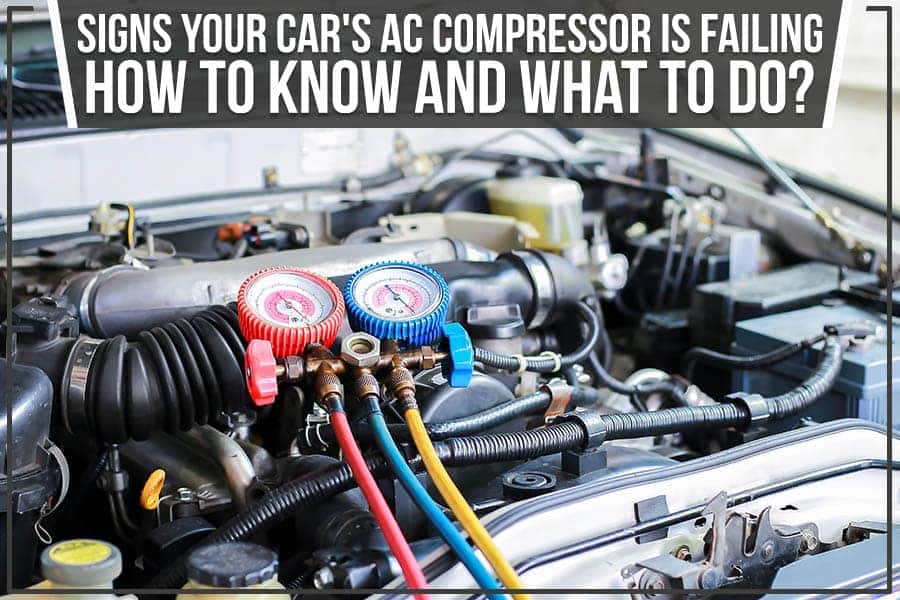
On the Gulf Coast an air conditioning system is not a luxury, and the compressor is the part of it that does the hard work. It pressurizes the refrigerant that carries heat out of the cabin, and when it starts to fail the symptoms usually appear well before it stops entirely. Knowing what to listen for gives you the chance to have it looked at before the failure takes other components with it.
Quick Answer: What Are the Signs of a Bad AC Compressor?
The most common signs of a failing car AC compressor are air that is no longer cold, a loud grinding or squealing noise when the air conditioning is switched on, a compressor clutch that will not engage, and visible refrigerant leaks around the compressor body. You may also notice the cabin cooling more slowly than it used to, or the system cooling at highway speed but not at idle. Have the system diagnosed before continuing to run it.
The Warning Signs, In the Order You Usually Notice Them
The air is not as cold as it used to be
This is almost always the first symptom. Cooling degrades gradually rather than stopping outright, and drivers often adapt to it without registering the change until a hot afternoon makes it obvious.
The system cools at speed but not at idle
If cold air returns once you are moving and disappears when you stop at a light, the system is struggling to maintain pressure at low engine speed. A worn compressor is a common cause, although a condenser fan that is not pulling enough air at a standstill can produce the same symptom.
Grinding, squealing, or rattling when the AC is on
Switch the air conditioning on and off while listening. A noise that appears with the system and stops without it points to the compressor bearing or clutch. Grinding in particular suggests internal wear that will not improve.
The compressor clutch will not engage
With the engine running and the air conditioning switched on, the center of the compressor pulley should engage with an audible click and begin turning. If the outer pulley spins and the center stays still, the clutch is not engaging, which can be an electrical fault, a low refrigerant charge, or the clutch itself.
Visible leaks or oily residue
Refrigerant carries oil with it, so a leak leaves an oily film that attracts dust. Look around the compressor body, the shaft seal, and the line fittings for a dark greasy residue.
A musty or chemical smell from the vents
A musty smell usually indicates mold in the evaporator or a blocked cabin filter rather than the compressor. A sharp chemical smell is more concerning and warrants immediate diagnosis.
The AC fuse keeps blowing
A compressor that is starting to seize, or a failing clutch coil, can draw more current than the circuit is designed for. If the air conditioning fuse blows repeatedly, stop using the system and have it checked.
What Causes an AC Compressor to Fail?
- Low refrigerant, which starves the compressor of the oil suspended in it.
- Overcharging, which raises pressure beyond what the compressor is designed to handle.
- Contamination or debris circulating through the system after a previous failure.
- A worn clutch or bearing, which is a wear item on any vehicle with high mileage.
- Long periods without use, which lets seals dry out. Running the system briefly once a month in winter helps.
- Salt air corrosion on the compressor body and lines, which is a real factor along the Emerald Coast.
What Should You Do If Your AC Compressor Is Failing?
Stop using the air conditioning. A compressor that is breaking up internally sends metal debris through the condenser, the expansion valve, and the evaporator, which turns a single-component repair into a system-wide one. Switching the system off protects the rest of the components while you arrange diagnosis.
Air conditioning is a sealed, pressurized system. Diagnosis needs gauge readings taken at both the high and low sides, and refrigerant has to be recovered with dedicated equipment before any component can be opened. This is not a driveway job, and venting refrigerant to atmosphere is illegal. Book a diagnostic appointment and our technicians will identify the failing component and talk you through the options before any work begins.
Mazda AC Service in Fort Walton Beach
The service department at Mazda of Fort Walton Beach carries the refrigerant recovery and recharge equipment an air conditioning diagnosis needs, and our technicians work to Mazda specification using genuine Mazda parts matched to your model. We service all Mazda vehicles regardless of where they were purchased, including factory warranty work.
We are at 785 Beal Pkwy NW, Fort Walton Beach, FL 32547. The service department is open Monday through Friday from 7:00 AM to 6:00 PM and Saturday from 8:00 AM to 3:00 PM, and is closed Sunday. Call 850-863-8381, schedule online, or check the current service specials before you book.
If the repair is larger than you expected, we also offer a Service Now, Pay-Over-Time option.
Frequently Asked Questions About Car AC Compressors
What are the signs of a bad AC compressor?
The clearest signs are air that is no longer cold, grinding or squealing when the air conditioning is switched on, a compressor clutch that will not engage, and oily residue around the compressor body indicating a refrigerant leak. Cooling that works at highway speed but fails at idle is a common early symptom.
Can you drive with a bad AC compressor?
You can usually drive the vehicle, but you should switch the air conditioning off. A compressor failing internally circulates metal debris through the condenser and evaporator, which turns one repair into several. If the compressor has seized and shares a serpentine belt with other accessories, driving becomes unsafe and the vehicle should be towed.
Is it hard to change an AC compressor?
It is not a DIY job. The system is sealed and pressurized, and the refrigerant has to be recovered with dedicated equipment before anything can be opened. Venting refrigerant to atmosphere is illegal. The replacement also usually requires the receiver drier or accumulator to be changed at the same time and the system to be evacuated and recharged to a specified weight.
Why is my car AC blowing warm air?
Warm air has several possible causes, and the compressor is only one of them. Low refrigerant from a slow leak is the most common. Others include a failed compressor clutch, a blocked condenser, an electrical fault in the control circuit, or a blend door problem in the cabin. A pressure test tells you which one you are dealing with.
How long does a car AC compressor last?
There is no fixed lifespan. Longevity depends far more on how the system has been maintained than on age alone. Systems that have been run low on refrigerant for extended periods, or left unused for months at a time, fail earlier. Running the air conditioning for a few minutes each month keeps the seals lubricated.
Should I recharge the AC myself with a can from an auto parts store?
We would advise against it. Those kits cannot tell you what the high-side pressure is doing, and overcharging a system damages the compressor. If the refrigerant is low it is because it is leaking, and adding more without finding the leak means it will be low again shortly. A proper diagnosis finds the leak.
0 comment(s) so far on Signs Your Car AC Compressor Is Failing