



How to Find a Short Circuit in Your Car
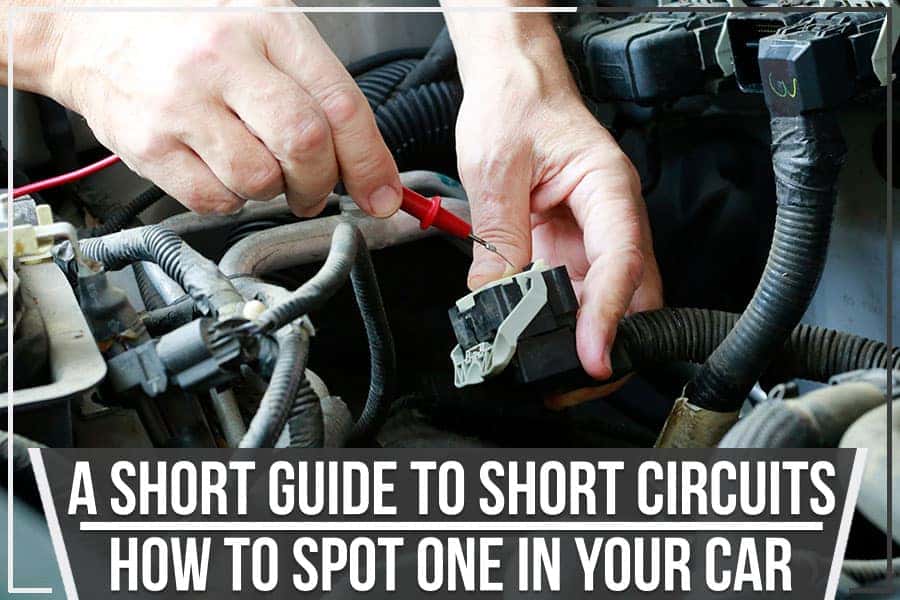
An electrical short is one of the few faults that can go from a blown fuse to a fire risk without much warning in between. The good news is that the symptoms are recognizable and the test procedure is methodical. This guide covers what a short circuit is, the signs that point to one, how to trace it with a multimeter or test light, and the point at which the job should go to a technician.
Quick Answer: How Do You Find a Short Circuit in a Car?
To find a short circuit in a car, first identify which fuse keeps blowing, because that tells you which circuit is affected. Remove the blown fuse, unplug the component on that circuit, and connect a 12-volt test light across the empty fuse terminals. If the light glows, the wiring is shorted to ground. Unplug each connector in turn from the component back toward the fuse box. When the test light goes out, the short is in the section you just isolated.
What Are the Signs of a Short Circuit in a Car?
A short circuit rarely announces itself directly. It shows up as one of these symptoms:
- A fuse that blows repeatedly, and blows again shortly after being replaced.
- Lights, power windows, or accessories that work intermittently or not at all.
- A burning or melted-plastic smell, particularly near the fuse box or under the dash.
- Discolored, brittle, or melted wire insulation.
- A battery that goes flat overnight with no obvious cause.
- Dimming or flickering that follows no pattern related to engine speed.
- Visible corrosion or green residue on a connector.
What Causes a Short Circuit in a Car?
A short circuit happens when current finds a path it was never meant to take, usually because two conductors have touched or because insulation has failed. Excess current flows, the component or wiring heats up, and the fuse blows to protect the circuit. The common causes are:
- Insulation worn through by age, heat cycling, or constant vibration.
- Corrosion, which is a particular problem on the Gulf Coast where salt air accelerates it.
- Rodent damage to wiring insulation, common in vehicles that sit unused.
- Loose or backed-out connectors that allow two pins to bridge.
- Accessory installation done without proper fusing or grounding.
- Water intrusion into a connector or module housing.
Two Types of Circuit You Are Testing
Before testing, it helps to know which kind of circuit you are dealing with, because it changes what a fault looks like.
A sensor circuit carries information to a control module. The engine coolant temperature sensor feeding data to the engine control module is a typical example. A fault here usually produces a diagnostic trouble code and often a warning light on the dashboard rather than a blown fuse.
An actuator circuit carries power to a device that does something. A headlight is the clearest example. A switch completes the circuit, current flows from the battery, and the light illuminates. Faults on actuator circuits are what usually blow fuses.
How to Test for a Short Circuit: Step by Step
Safety warning: Working on a vehicle electrical system carries a genuine risk of burns, short circuits, and airbag deployment. If you are not confident with a multimeter, or if the fault involves airbag, hybrid, or high-voltage circuits, stop and book a diagnostic appointment. Never probe an airbag or high-voltage circuit.
You will need a 12-volt test light or a digital multimeter, a wiring diagram for your vehicle, a wrench or socket for the battery terminal, and a fuse puller.
Step 1: Identify the affected circuit
Find the fuse that keeps blowing and check the fuse box legend or your owner’s manual to see what it protects. Note the wire colors for that circuit from the wiring diagram, because you will be following them.
Step 2: Switch the circuit off and remove the blown fuse
Turn the ignition and the switch for that circuit off. Pull the blown fuse with a fuse puller and leave the socket empty. You are going to use that empty socket as your test point.
Step 3: Unplug the component on that circuit
Disconnect the connector at the component the circuit powers, such as the light, motor, or accessory. This separates a fault in the component itself from a fault in the wiring leading to it.
Step 4: Confirm the short
With a test light, leave the battery connected and clip the test light across the two terminals of the empty fuse socket. If it glows, current is reaching ground through the wiring and you have confirmed a short. With a multimeter, disconnect the battery negative terminal first using the correct size wrench or socket, and set the meter to continuity. Place one probe on the fuse socket terminal that leads to the component and the other on clean bare metal on the chassis. A continuity tone confirms the wire is touching ground somewhere.
Step 5: Work back from the component
Starting at the component end, disconnect each connector along the circuit one at a time, moving toward the fuse box. Watch your test device after each disconnection.
Step 6: Read the change
The moment the test light goes out or the continuity tone stops, the short is in the section of harness between the connector you just unplugged and the previous one. That is the length of wiring to inspect.
Step 7: Inspect the isolated section
Look for chafed insulation where the harness passes through a bulkhead or across a bracket, for melted or discolored sections, for green corrosion inside connectors, and for chew marks. Flex the harness gently while watching the test device, since intermittent shorts often reveal themselves under movement.
Step 8: Repair or hand it over
A single chafed wire in an accessible location can be repaired with a proper solder joint and heat-shrink insulation. Damage inside a loom, at a connector body, or anywhere near an airbag or module circuit should go to a technician. If you disconnected the battery, reconnect the negative terminal last, then fit a fuse of the correct rating. Never fit a higher-rated fuse to stop it blowing.
When to Stop and Book a Diagnostic
Hand the job over if any of the following apply:
- The circuit involves airbags, seatbelt pretensioners, or any hybrid or plug-in high-voltage system.
- You cannot obtain a wiring diagram for your specific vehicle and model year.
- The fault is intermittent and will not reproduce during testing.
- You have found damage inside a sealed loom or a connector body.
- There is a burning smell but no blown fuse, which can indicate a fault upstream of the fuse.
- The vehicle is under warranty, since a self-repair can affect coverage.
Mazda Electrical Diagnostics in Fort Walton Beach
The service department at Mazda of Fort Walton Beach uses Mazda diagnostic equipment and factory wiring information, which shortens the time it takes to isolate an electrical fault and means the repair is done to Mazda specification with genuine parts. We service all Mazda vehicles regardless of where they were purchased, including factory warranty work.
We are at 785 Beal Pkwy NW, Fort Walton Beach, FL 32547. The service department is open Monday through Friday from 7:00 AM to 6:00 PM and Saturday from 8:00 AM to 3:00 PM, and is closed Sunday. Call 850-863-8381 or schedule online.
Frequently Asked Questions About Car Short Circuits
How do you find a short circuit in a car with a multimeter?
Disconnect the battery negative terminal, remove the fuse for the affected circuit, and unplug the component that circuit powers. Set the multimeter to continuity. Place one probe on the fuse socket terminal that leads to the component and the other on clean bare metal on the chassis. A continuity tone means the wire is touching ground somewhere. Unplug connectors one at a time from the component back toward the fuse box until the tone stops.
Can you drive a car with a short circuit?
It is not advisable. A short circuit generates heat at the fault point and can melt insulation, damage a control module, or start a fire. If a fuse keeps blowing, replacing it repeatedly is treating the symptom while the underlying fault continues. Have the vehicle diagnosed before driving it further.
What is the difference between a short circuit and an open circuit?
A short circuit is an unintended path that lets too much current flow, which blows fuses and produces heat. An open circuit is a break that stops current flowing at all, so the component simply does not work and no fuse blows. Repeated blown fuses point to a short. A dead component with an intact fuse points to an open.
Why does my car fuse keep blowing?
A fuse that blows repeatedly is doing its job and telling you there is a fault on that circuit. The most common cause is a short to ground from damaged insulation. Other causes include a failing component drawing more current than it should, a badly installed accessory, or water in a connector. Fitting a higher-rated fuse is dangerous and removes the protection the circuit depends on.
How long does it take to find a short circuit?
It depends entirely on the circuit. A short on an accessible lighting circuit can be traced in under an hour. A fault inside a loom, or one that only appears intermittently, can take considerably longer because the harness has to be opened and the vehicle driven or flexed to reproduce the condition.
Can a short circuit drain a car battery?
Yes. A short that allows current to flow with the ignition off will discharge the battery, sometimes overnight. If your battery goes flat repeatedly and the charging system tests good, a parasitic drain caused by a short is one of the first things a technician will check.
0 comment(s) so far on How to Find a Short Circuit in Your Car