



Mazda Innovation for the Environment in Fort Walton Beach, FL, Near Niceville

LOVE DRIVING, LOVE THE WORLD AROUND YOU
A love of driving and a love of the earth can—and indeed must—be harmonious. To ensure a long and happy relationship
between cars, people, and our precious planet, Mazda is focused on developing the entire lifecycle of its vehicles in an
environmentally friendly manner. As Mazda introduces new sustainable technologies, it carefully considers the
manufacture, usage, and the end-of-life recycling of its cars to minimize the environmental impact, so you can love
driving and love the world around you.
Mazda’s innovation extends into developing new technologies to create vehicles and processes that make as little environmental impact as possible. Come see the product of Mazda’s innovation for yourself by shopping for a new vehicle at Mazda of Fort Walton Beach in FL – near Niceville, Pensacola, and Destin.

OUR COMMITMENT TO PLANET EARTH
BY 2050, MAZDA WILL ACHIEVE CARBON NEUTRALITY DURING THE ENTIRE LIFE CYCLE OF ITS VEHICLES AND THE ENTIRE SUPPLY CHAIN.
LIFE CYCLE PERSPECTIVE
REDUCING EMISSIONS FROM MANUFACTURING
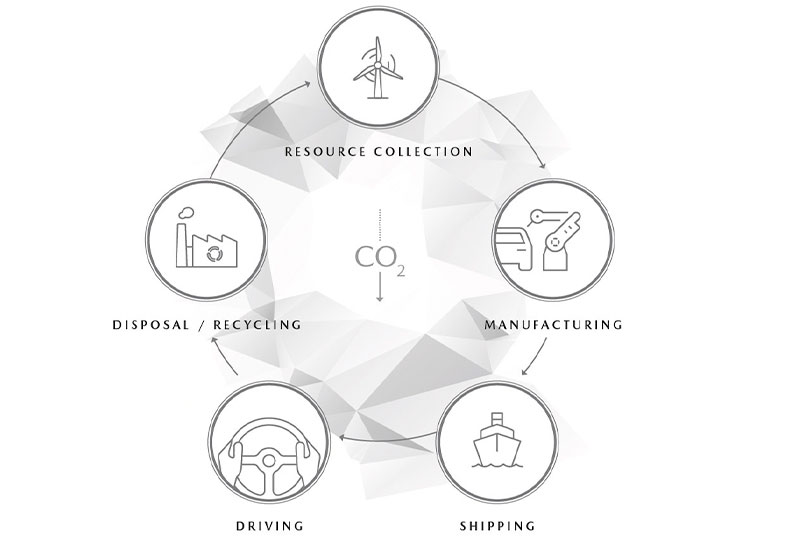
Mazda takes responsibility for the emissions produced by its cars, not just when they’re being driven, but also when
they are made and when they reach the end of their use. To reduce the CO2 emissions during the entire life of the
vehicle, Mazda uses a Life Cycle Assessment, which allows it to pinpoint areas that can reduce the environmental burden
of car manufacture, delivery, use, and recycling.
REDUCING REAL-WORLD EMISSIONS FROM MAZDA VEHICLES
The right car in the right place
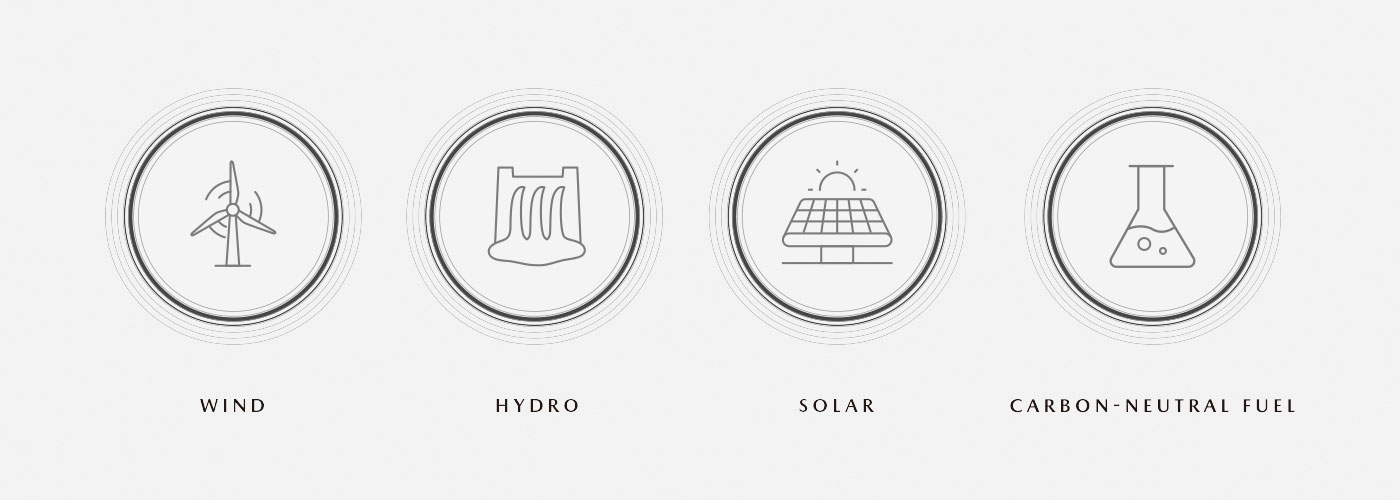
There is more to reducing emissions than simply switching over to battery electric vehicles. If the electrical energy
used to charge these cars is not produced sustainably then the emissions are merely moved to power stations. That’s why
Mazda offers a multi-solution approach, providing a range of efficient internal combustion, hybrid,plug-in hybrid, and
electric cars to suit customers’ needs and the power-generation situations across the world.
MAZDA’S JOURNEY TO 2030

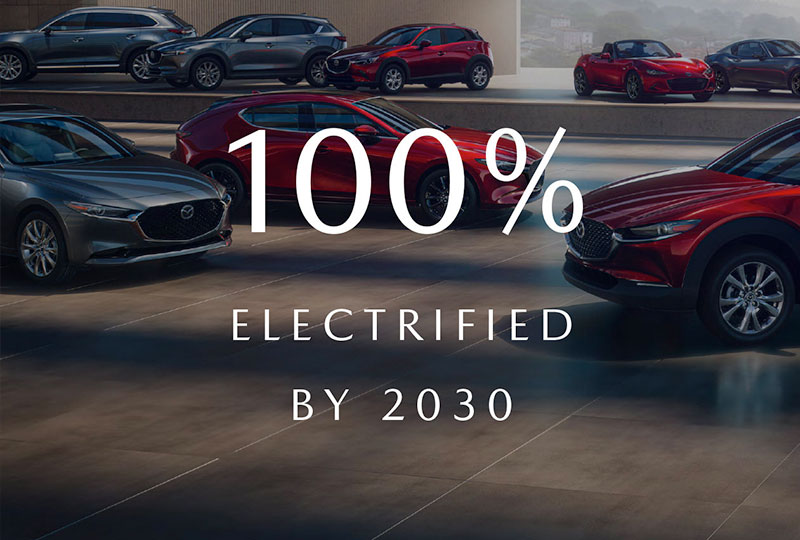
Between 2025-2030, Mazda will introduce multiple electric vehicles.
By 2030, 100% of Mazda products will be electrified and pure-electric vehicles will account for 25 to 40% of those.
THE ROAD TO ZERO
Mazda’s life cycle assessment has a zero target: net zero CO2 emissions. Here are just a few of the innovations Mazda is
making on the road to zero.
RENEWABLE ENERGY
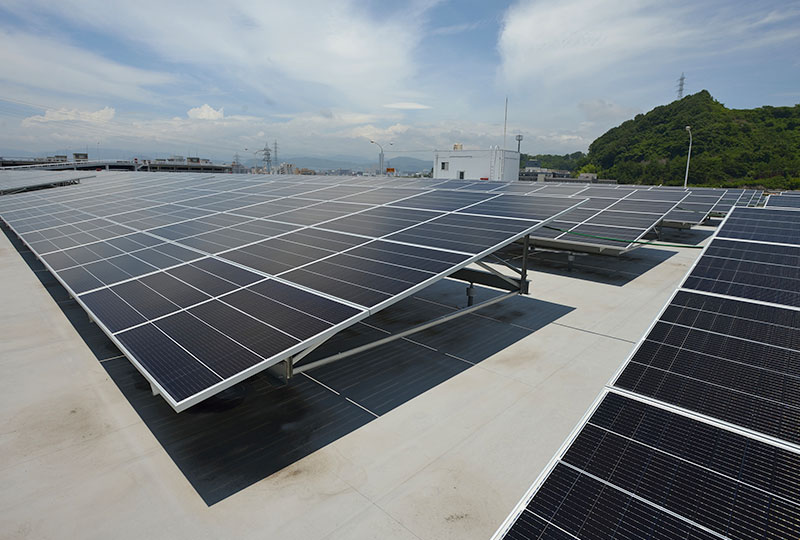
Mazda has installed solar panels at its head office in Hiroshima, Japan.
Our Hiroshima factory is now served by a 1.1 MW solar array that provides power to the entire plant and is also used to
charge the batteries of the all-electric Mazda MX-30, which is made on site.

TRANSPORTATION
Efficient transportation throughout the supply chain reduces CO2 during transportation by over 40% compared to 1990.
Since 2018, Mazda has cut CO2 emissions from the delivery of components by 40.6% by using a ‘milk run’ system.(Compared
with FY March 1991 Levels) This sees Mazda collect parts from multiple suppliers instead of each supplier delivering
separately.
(Based on our own research).
MANUFACTURING
Aqua-tech paint provides a finish that’s good for the planet.
Mazda’s three-layer wet paint system using Aqua-tech paint has reduced volatile organic compound emissions by 78%
compared to the older oil-based paints. Carbon dioxide emissions are also down by more than 15% thanks to energy-saving
air conditioning and infra-red heating system to finish the paint.


DESIGN
Aerodynamic design saves fuel costs and emissions.
Mazda vehicles are designed to cut a clean path through the air. This reduced drag means the engine doesn’t need to work
so hard, reducing emissions and your fuel bills.
CARBON-NEUTRAL FUEL
Cleaner fuel expands possibility.
Mazda is part of the eFuel Alliance and is investigating the possibility of using biofuel, e-fuel, and hydrogen as
carbon-neutral fuels for the future. In particular for biofuels, Mazda is investigating the possibility of using
microalgae, which reduces the impact of issues such as land-use competition and deforestation. When burned this fuel
only releases CO2 that has previously been captured by the algae from the atmosphere using photosynthesis.